
When should you rebrand? The signs, and when not to
The signs a business has outgrown its brand, the bad reasons to rebrand, refresh versus full rebrand, and how to change without losing recognition.
Key takeaways
- Rebrand when the business has changed and the brand now gets in the way: a new offer, audience, market, owner or name.
- Do not rebrand out of boredom, to give a new leader a mark of their own, or to cover a product problem.
- Most businesses need a refresh, not a full rebrand: keep what people recognise and fix what is broken.
- Find out what customers actually recognise before you change anything, and keep at least one of those things.
- A rebrand is more than a logo: strategy, type, colour, voice, guidelines and the website all have to move together.
You should rebrand when your brand no longer describes the business you have become. That usually means your offer, audience, market, ownership or name has changed, and the old identity now gets in the way. You should not rebrand because you are bored of the logo, because a new leader wants a mark of their own, or because sales are down for reasons that sit in the product.
Most of the time, the honest answer is somewhere in between. A refresh that keeps what people recognise will often do more good than starting again. This guide covers the signs, the traps, and how to change without losing the recognition you have already built.
What are the signs it is time to rebrand?
One of these on its own may not be enough. Two or three together usually are.
You have outgrown your positioning
You started by selling one thing to one kind of customer. Now you sell something broader, or more premium, or to a different buyer. If your brand still looks and sounds like the early version, it is underselling you. A clear test: if a new customer would guess the wrong price, size or type of company from your brand alone, it is out of date.
You are moving into a new market or audience
A brand built for a local market may not travel. A consumer brand moving into business sales may need to look more serious. A brand built for one age group may put another off. When the audience changes, the brand has to be checked against the new people, not the old ones.
Two companies are becoming one
Mergers and acquisitions almost always need brand work. You have to decide whether one brand absorbs the other, whether both survive in some structure, or whether something new replaces both. Leaving it unresolved confuses customers and staff alike.
There is a change of ownership or management
When a business changes hands, or takes back control from an outside operator, the old brand may belong to the old arrangement. The Cunningham, a hotel in central Bangalore, is a clear case. The owners took operations in house after many years under outside management and relaunched the property under its own name. That needed a full brand, built from the ground up. The story is in how to design a luxury hotel brand identity.
Your name is causing problems
People mispronounce it, misspell it, confuse it with a competitor, or cannot find you when they search. Or the name describes something you no longer do. These are real costs, and they grow with every year you wait.
Your identity has become inconsistent
Different teams use different logos, colours and fonts. The website, the sales deck and the packaging look like three companies. This is common after fast growth, and it often needs a system and guidelines more than a new look.
You look dated next to competitors
Put your homepage, your packaging or your app icon next to your three closest competitors. If yours looks like it belongs to an earlier decade, buyers may assume the product does too. Be careful here, though. Looking different is good. Looking old is the problem.
You have a legal problem
If someone holds an earlier trademark on your name or mark, you may have no choice. It is far cheaper to find this out before launch than after, so trademark checks should be part of any new brand work.
When should you not rebrand?
These are the reasons we hear most often, and the ones we push back on.
- The team is bored of the brand. You see your logo every day. Your customers see it far less. The point at which you are tired of it is often the point at which they have only just started to recognise it.
- A new leader wants to make a mark. A rebrand driven by one person’s taste rarely survives that person. If the business has not changed, the brand probably should not either.
- The real problem is the product. If customers leave because of price, quality or service, a new logo will not keep them. It may even look like a distraction.
- One bad quarter. Short-term dips have short-term causes. A brand is a long-term asset.
- A design trend. Following a trend makes you look like everyone else for a year, and dated soon after.
- There is no budget to roll it out. A new identity applied to half your touchpoints is worse than a consistent old one.
“You should rebrand when your brand no longer describes the business you have become.”
Do you need a full rebrand or a refresh?
This is the most useful question to settle early, because it decides almost everything else.
A refresh keeps your name and the core of your mark. It might redraw the logo so it works better at small sizes, tidy the typography, update the palette, and write proper guidelines. Customers notice that things look sharper. They do not feel they are dealing with a new company.
A full rebrand starts with the strategy: who you are for, what you stand for, and how you differ. Then it rebuilds the identity around that answer, and sometimes renames the business.
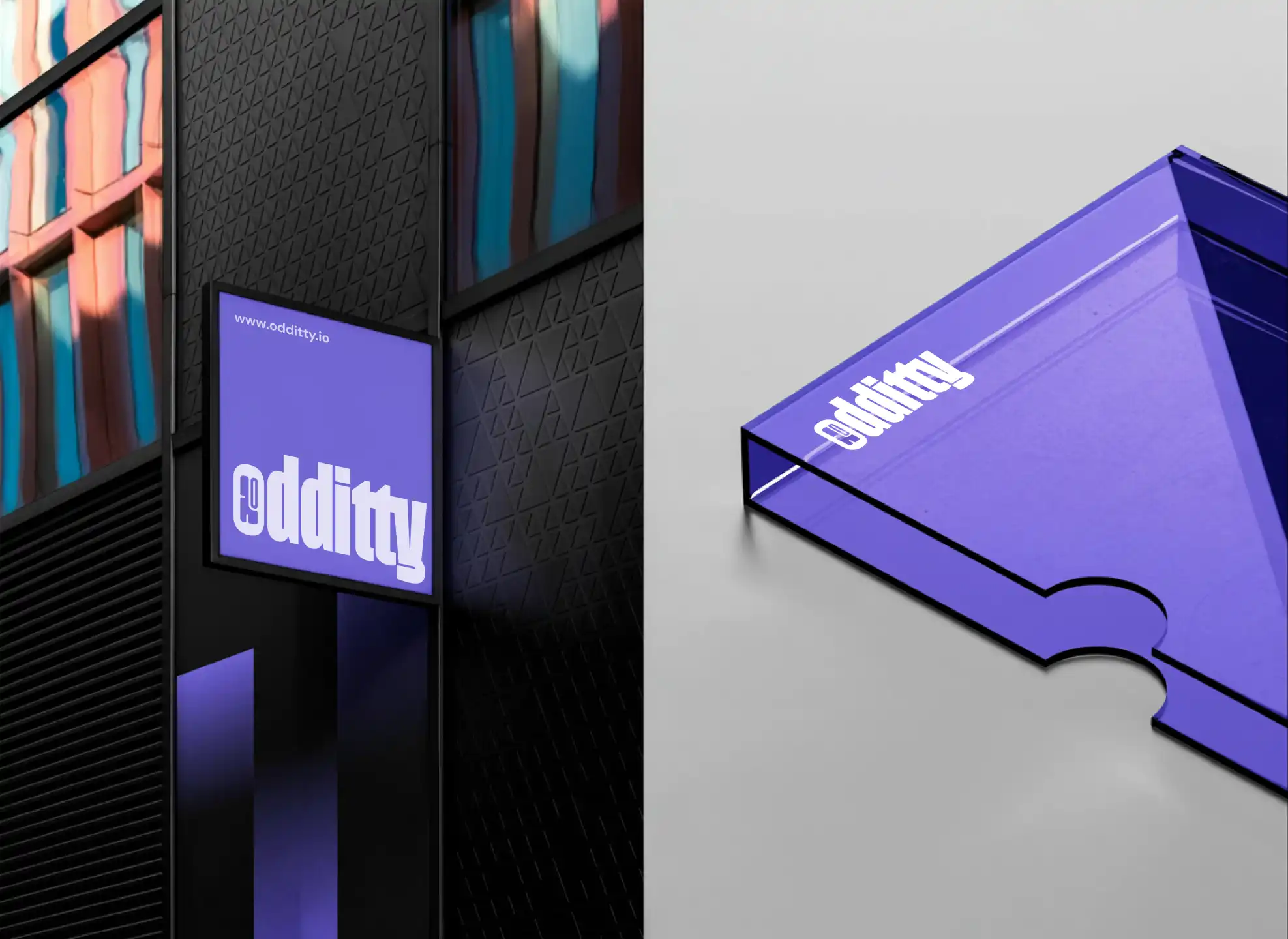
Oddity, a decor brand we worked with, shows a middle path. We built a whole new identity system around it: colour, gradients, a custom typeface, an icon set and a brand book of about 150 pages. But we refined the existing logo rather than replacing it, and designed supporting symbols around it. That kept the recognition the brand had already earned and still gave it somewhere to grow. The full system is at /projects/odditty.
How do you rebrand without losing recognition?
The risk in any rebrand is throwing away something customers valued without knowing it. These steps reduce that risk.
- Audit what people actually recognise. Ask customers. It may be your colour, a shape in the mark, the name, or the way you write. It is often not what the team assumes.
- Keep at least one anchor. Carry one recognised asset across, such as the colour, the symbol or the name. Some of the best-known brands only dropped their name from their logo once the symbol was recognised on its own.
- Explain the change. Tell customers why, in plain words. A rebrand that comes with a reason feels like progress. One without a reason feels like a cover-up.
- Launch it everywhere you can at once. Website, social profiles, email signatures and sales materials should switch together. Physical items like signage can follow on a planned schedule.
- Protect your search traffic. Keep URLs where possible, set permanent redirects from old addresses, and update your business listings and profiles on launch day.
- Listen, but do not panic. Some pushback is normal. There have also been famous cases of a large brand reversing a new logo within days after customers objected, which is a reminder to test before launch rather than after.
For a look at how two very large brands handled this, read what founders can learn from the McLaren and Novo rebrands.
What does a rebrand include?
A rebrand is not a new logo. A complete one usually covers:
- Strategy and positioning: who you are for, what you promise, and how you differ.
- Name: only if the name is part of the problem.
- Logo and mark system: primary logo, symbol, wordmark and versions for small sizes and one colour.
- Typography: typefaces and a hierarchy for headings and body text.
- Colour: a palette with exact values for screen and print.
- Graphic language: patterns, shapes, imagery and illustration style.
- Voice: how the brand writes and speaks.
- Guidelines: the rules, written down so others can apply them.
- Applications: stationery, packaging, signage, social templates.
- Website: usually the most visible place the new brand lives.
If you are unsure which of these you need, our guide to logo vs brand identity vs branding explains where each one starts and stops.
How long does a rebrand take, and what drives the timeline?
There is no fixed number. The main drivers are:
- Scope. A refresh is quicker than a new strategy and identity.
- Naming. A new name needs creative work, checks on trademarks and domains, and agreement, all of which take time.
- Decision makers. The more people who must approve, the longer each round takes.
- Touchpoints. A software company has fewer physical items than a hotel. The Cunningham’s system covered between 50 and 100 collateral items, and the mark alone went through 200 to 300 iterations. Brand to live website took seven months. Oddity, from brand system to live store, took eight.
- The website. If the rebrand includes a new site, its build often sets the launch date.
The process itself is usually the same shape: audit, strategy, naming if needed, identity design, the system and guidelines, application, and launch.
The short version
Rebrand when the business has changed and the brand is now holding it back. Refresh when the brand is right but tired or inconsistent. Leave it alone when the only thing that has changed is how you feel about it. At BUNQ LABS, an award-winning design studio in India, we often advise clients to change less than they expected. You can see how we approach this work on our services page.
If you are weighing a rebrand and want an honest view on whether you need one, get in touch.
Questions
Frequently asked questions
How do I know if my business needs a rebrand?
Look for a gap between the business you are now and the one your brand describes. If you have changed your offer, audience, market or ownership, or your name is causing confusion or legal trouble, a rebrand is worth considering.
What is the difference between a rebrand and a brand refresh?
A refresh keeps your name and core mark and updates how they are drawn and used. A full rebrand rethinks the positioning and usually the identity as a whole, sometimes including the name.
How much does a rebrand cost?
It depends on scope more than anything else. A refresh of an existing mark costs far less than a new strategy, a new name and a new identity, and the number of places the brand has to be applied, such as signage, packaging and a new website, often matters as much as the design itself.
Will a rebrand hurt my SEO?
It does not have to. Keep your URLs where you can, set permanent redirects from every old address, and update your business listings and social profiles at launch so search engines and customers can follow the change.
How long does a rebrand take?
It depends on the scope and the number of touchpoints. The Cunningham, a full hotel rebrand with a property-wide collateral system and a new website, took seven months from brand to live site.
Should we change our name when we rebrand?
Only if the name itself is the problem: it is confusing, limiting, hard to say, or legally unsafe. A name carries recognition you have paid for, so keep it unless there is a clear reason not to.
Newsletter